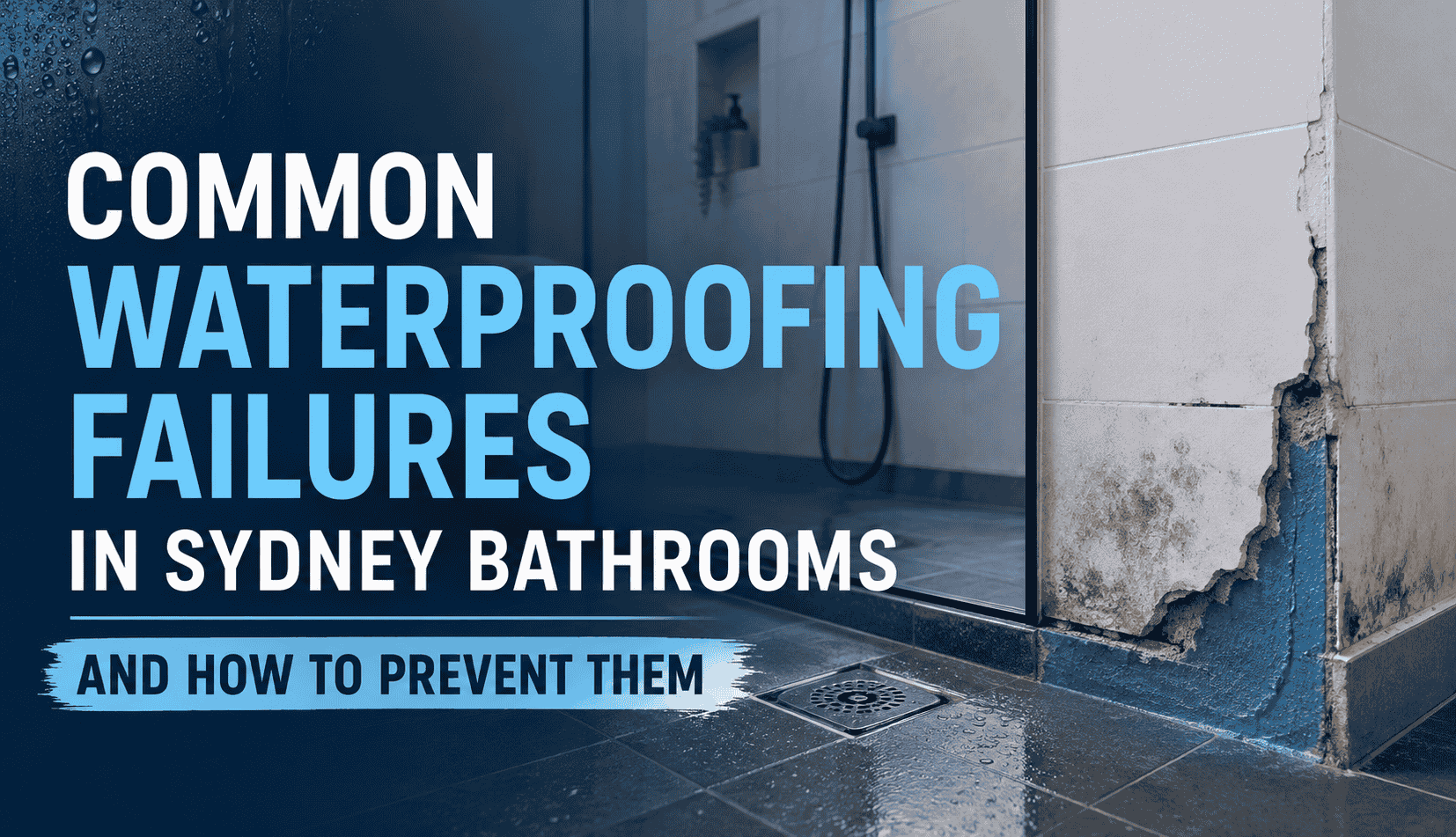
Bathroom waterproofing is one of the most important parts of any bathroom renovation. Tiles, grout and fittings may look perfect on the surface, but they cannot stop water from reaching the structure if the waterproofing underneath has been poorly designed or installed.
In Sydney homes, bathroom waterproofing failures can lead to dampness, mould, damaged walls and floors, leaking showers and expensive repairs. Waterproofing is also an important part of building compliance. The National Construction Code (NCC) and AS 3740 – Waterproofing of domestic wet areas provide requirements for protecting wet areas from water damage.
For homeowners planning a bathroom renovation, understanding the common causes of waterproofing failure can help prevent problems before they start.
What Is Bathroom Waterproofing?
Bathroom waterproofing is a protective system designed to stop water and moisture from passing into areas where they can cause damage.
A waterproofing membrane is generally applied to areas such as shower floors, shower walls and other wet areas according to the relevant requirements and the chosen construction method.
It is important to remember that tiles are not the waterproofing system. Water can pass through grout joints, small cracks and gaps. The membrane underneath provides the essential layer of protection.
In Sydney, waterproofing work is also regulated. NSW Government guidance states that waterproofing is trade work, and the appropriate licence requirements apply to residential building or trade work above the relevant value threshold.
What Are the Most Common Bathroom Waterproofing Failures?
Several problems can cause a bathroom waterproofing system to fail. Some are related to poor preparation, while others happen because the membrane, joints, drainage or penetrations have not been installed correctly.
1. Poor Surface Preparation
One of the first steps in successful waterproofing is preparing the surface properly.
If the substrate is dusty, dirty, uneven, damp when it should not be, or has not been repaired correctly, the waterproofing membrane may not bond properly.
Over time, poor adhesion can create weak points where water can penetrate.
How to prevent it:
- Clean the surface thoroughly before waterproofing.
- Repair cracks and damaged areas.
- Make sure the substrate is suitable for the waterproofing system.
- Follow the manufacturer’s preparation and application instructions.
- Check that surfaces are ready before the membrane is applied.
Good preparation may not be visible once the bathroom is finished, but it plays a major role in the long-term performance of the waterproofing.
2. Incorrect Waterproofing Membrane Application
The waterproofing membrane needs to be applied correctly and consistently.
Applying too little product, missing sections or failing to follow the required application method can create weak areas. A membrane that looks complete does not necessarily mean the whole system has been installed correctly.
Corners, junctions, penetrations and changes in materials require particular attention.
NSW Building Commission resources identify waterproofing defects as a significant building issue and reference AS 3740:2021 Waterproofing of domestic wet areas in its defects library.
How to prevent it: Use a suitable waterproofing system and follow its installation requirements carefully. Do not rush the application or assume that one quick coat is enough.
3. Poor Waterproofing Around Shower Areas
The shower is one of the highest-risk areas in a bathroom because it receives regular and direct water exposure.
If the shower walls, floor, corners or junctions are not waterproofed correctly, water can move behind the finished surface.
The NCC 2022 Housing Provisions include requirements for wet-area waterproofing, including waterproofing shower walls to a specified height.
How to prevent it: Make sure the shower area is waterproofed according to the applicable requirements and installation system before tiling begins.
4. Poor Sealing Around Pipes and Fixtures
Bathrooms contain many penetrations, including:
- Shower pipes
- Tap fittings
- Mixer outlets
- Floor wastes
- Toilets
- Vanity plumbing
These areas can become weak points if they are not sealed correctly.
Even a small gap around a pipe can allow moisture to move behind the surface.
How to prevent it: Pay close attention to every penetration and use compatible sealing components and methods as required by the waterproofing system.
5. Incorrect Falls and Drainage
Water should be directed towards the appropriate drainage point rather than being allowed to sit on the bathroom floor.
Poor falls can result in water pooling around the shower or floor waste. This increases the amount of water sitting on the finished surface and can contribute to problems if other parts of the system are also poorly installed.
The NCC 2022 introduced specific requirements for falls where a floor waste is installed, including grading the floor towards the waste.
How to prevent it: Plan drainage and floor falls before waterproofing and tiling. The substrate, waste and finished tile levels should work together.
6. Missing or Incorrect Bond Breakers
Bathrooms contain corners and changes of plane where different surfaces meet.
These areas need to accommodate movement. If the waterproofing system requires a bond breaker or similar treatment and it is not installed correctly, movement can place stress on the membrane.
The NSW Building Defects Library specifically identifies bond breakers at changes of plane, materials and movement joints as part of AS 3740 installation requirements.
How to prevent it: Follow the waterproofing manufacturer’s system and the applicable Australian Standard requirements at corners, junctions and movement areas.
7. Tiling Too Soon After Waterproofing
Waterproofing products need the correct time to cure before other work continues.
If tiling starts before the membrane has properly cured, the waterproofing system may be compromised.
How to prevent it: Follow the manufacturer’s specified curing and drying times. A good bathroom renovation should never be rushed simply to finish the project faster.
8. Cracked Grout and Failed Silicone Joints
Cracked grout and deteriorated silicone can allow water to enter areas where it should not.
However, it is important to understand that replacing grout or silicone does not automatically fix a failed waterproofing system.
If moisture has already travelled behind the tiles, the underlying problem may require further investigation.
How to prevent it: Inspect grout and silicone joints regularly and repair damaged areas early. If there are ongoing leaks or dampness, investigate the cause rather than simply covering the visible damage.
What Are the Signs of Bathroom Waterproofing Failure?
Some waterproofing problems are easy to notice, while others develop slowly.
Common warning signs include:
- Damp or discoloured walls
- Mould or persistent musty smells
- Peeling paint near the bathroom
- Water stains on ceilings below a bathroom
- Loose or lifting tiles
- Cracked grout
- Silicone that has deteriorated
- Water escaping from the shower area
- Persistent dampness around the floor or walls
- Swollen or damaged skirting and adjoining surfaces
NSW Government advice for property inspections also recommends checking wet areas for dampness and being cautious about signs such as mould and damaged flooring.
If these signs continue after cleaning or resealing, it is worth having the bathroom professionally inspected.
How Can Sydney Homeowners Prevent Waterproofing Problems?
The best way to prevent waterproofing failure is to get the system right before the tiles go down.
Here are some practical steps:
Choose Qualified Professionals
Use appropriately qualified and licensed professionals for relevant waterproofing work. NSW Government confirms that waterproofing is regulated trade work.
Do Not Treat Tiles as Waterproofing
Tiles provide a finished surface, but the waterproofing system underneath is what protects the building from moisture penetration.
Check the Preparation
Before waterproofing starts, make sure the substrate is properly prepared and suitable for the chosen system.
Pay Attention to Details
Corners, junctions, pipe penetrations, shower areas and floor wastes need careful treatment.
Allow Proper Drying and Curing
Do not rush the next stage of the renovation. Waterproofing products need to be installed and cured according to their requirements.
Check Drainage and Falls
Make sure water is directed towards the drainage point and does not regularly pool in unwanted areas.
Inspect Before Tiling
Once waterproofing is completed, it should be checked before it is covered by tiles. Finding a problem at this stage is much easier than discovering it after the bathroom has been completed.
Why Is Professional Bathroom Waterproofing Important in Sydney?
Waterproofing is often hidden once a bathroom is finished. This makes installation quality particularly important because a problem may not become obvious until significant damage has already occurred.
NSW Government research continues to identify waterproofing as a major category of serious building defects in strata buildings. Its 2025 research reported waterproofing defects as the most prevalent serious defect category in the surveyed buildings.
A professional approach can help reduce the risk of moisture damage, protect the building structure and give homeowners greater confidence in their bathroom renovation.
Protect Your Sydney Bathroom From Waterproofing Problems
Good bathroom waterproofing starts with proper planning, surface preparation and careful installation. Problems around shower areas, corners, penetrations, drainage and movement can all contribute to water damage when they are not handled correctly.
For Sydney homeowners planning a new bathroom or bathroom renovation, getting the waterproofing right before tiling can save significant time, stress and repair costs later.
Glow Max Pty Ltd can help homeowners looking for quality tiling and bathroom solutions in Sydney. By combining careful preparation with professional workmanship, the goal is to create bathroom spaces that look great and perform well for years to come.
Need help with your Sydney bathroom renovation? Contact Glow Max Pty Ltd to discuss your tiling and waterproofing requirements.
Frequently Asked Questions
Can bathroom waterproofing fail even if the tiles look perfect?
Yes. Waterproofing is underneath the finished surface, so a bathroom can look perfectly fine while moisture is entering areas behind the tiles.
How long does bathroom waterproofing last?
A properly designed and installed waterproofing system can provide long-term protection. Its performance depends on the products used, installation quality, building movement and how the bathroom is maintained.
Can cracked grout cause a bathroom leak?
Cracked grout can allow water to enter behind the tiled surface, but it does not always mean the waterproofing membrane has failed. The cause should be investigated before deciding on the repair.
Should waterproofing be done before tiling?
Yes. Waterproofing is normally completed before tiles are installed so the membrane can protect the underlying structure from water penetration.
How do I know if my bathroom waterproofing has failed?
Look for persistent dampness, mould, water stains, loose tiles, damaged grout, deteriorating silicone or water appearing in adjoining rooms. A professional inspection may be needed to identify the actual cause.