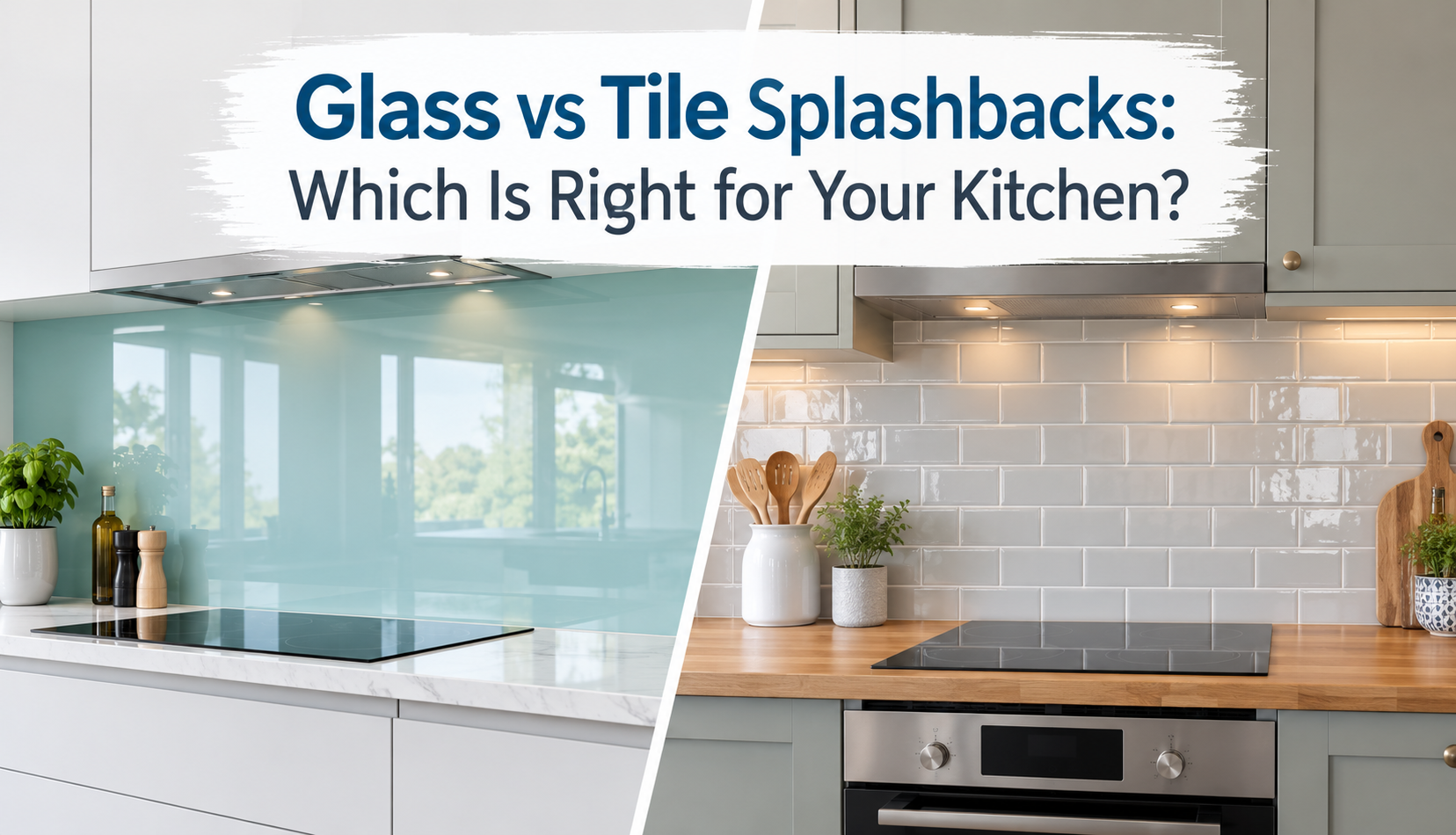
Choosing the right splashback is an important part of planning a kitchen. A splashback protects your walls from cooking splashes, grease, water and everyday mess. It also adds colour, texture and style to your kitchen.
Two popular options for Australian homes are glass and tile splashbacks. Both offer practical benefits, but they differ in appearance, cleaning, installation, maintenance and cost. The right choice depends on your kitchen design, cooking habits and budget.
If you are exploring kitchen splashback ideas Sydney, comparing these two materials can help you make a confident decision. Whether you prefer a clean, modern finish or a classic tiled look, understanding the differences will help you choose a splashback that suits your home.
What Is a Glass Splashback?
A glass splashback is a smooth glass panel installed behind a cooktop, sink or kitchen benchtop. It creates a neat, modern appearance and protects the wall from everyday splashes.
Glass splashbacks are available in many colours, including white, black, grey, green and neutral shades. You can also choose finishes that complement your cabinetry, benchtop and overall kitchen design.
Benefits of Glass Splashbacks
1. Easy to clean
Glass has a smooth surface without grout lines. You can usually remove grease, watermarks and food splashes with a soft cloth and a suitable glass cleaner.
2. Modern appearance
Glass works well in contemporary kitchens. Its smooth finish creates a clean look and can help a smaller kitchen feel more open.
3. Fewer places for dirt to collect
Unlike tiled surfaces, glass does not have grout joints across the panel. This reduces the number of areas where grease and dirt can build up.
4. A wide range of colours
You can choose a colour that matches your kitchen or creates contrast. For example, a white glass splashback can brighten a darker kitchen, while a black panel can create a bold feature.
5. A seamless finish
Large glass panels can cover a wide wall area with very few visible joints. This gives the kitchen a consistent and uncluttered appearance.
Things to Consider Before Choosing Glass
Glass splashbacks also have a few limitations. They often require professional measurement and installation because the panels need to fit around power points, windows and other fixtures.
The wall must be properly prepared, as uneven surfaces can affect the finish. Glass can also show fingerprints, water spots and cooking marks, particularly in darker colours.
You should select glass specifically designed and rated for the intended kitchen application. Areas behind cooktops require suitable heat-resistant materials and installation methods. Always confirm the manufacturer’s requirements before choosing a panel.
What Is a Tile Splashback?
A tile splashback uses individual tiles installed across the wall behind your kitchen benchtop, sink or cooktop. Tiles come in different sizes, colours, shapes, patterns and materials.
Popular options include ceramic, porcelain, subway, mosaic and patterned tiles. This variety makes tiles suitable for traditional, modern, coastal, industrial and farmhouse-style kitchens.
Benefits of Tile Splashbacks
1. Many design options
Tiles give you plenty of freedom to create a kitchen that reflects your personal style. You can choose simple white subway tiles, colourful mosaics or patterned designs.
2. Different textures and shapes
Tiles can add depth and character to a kitchen. Textured finishes, geometric patterns and decorative layouts can turn a splashback into a feature wall.
3. Flexible installation
Individual tiles can suit walls with different shapes and dimensions. A tiler can cut tiles around corners and fixtures to create the required layout.
4. Easier individual repairs
If a tile cracks or becomes damaged, you may be able to replace that tile instead of removing the entire splashback. The repair depends on the tile, grout, adhesive and surrounding surface.
5. Options for different budgets
Basic ceramic tiles may offer an affordable starting point, while premium porcelain, natural stone and decorative tiles can cost more. Your final budget will also depend on labour, preparation and grout selection.
Things to Consider Before Choosing Tiles
The main consideration is grout maintenance. Grout lines can collect grease, dirt and food residue, especially behind a frequently used cooktop.
You may need to clean the grout regularly and reseal it if the selected grout product requires sealing. Installation also takes careful planning because tile size, spacing, alignment and pattern all affect the final result.
Some decorative or textured tiles need more attention during cleaning. Choose a finish that suits your daily cooking routine.
Glass vs Tile Splashbacks: Key Differences
Both materials can protect your kitchen walls and improve the appearance of your space. However, their everyday performance differs.
1. Appearance and Style
Glass offers a smooth, uniform finish. It suits homeowners who prefer clean lines, simple colours and a contemporary kitchen.
Tiles offer greater variation in shape, texture and pattern. They work well when you want to introduce decorative details or create a traditional look.
When researching kitchen splashback ideas Sydney, consider your existing cabinetry and benchtop before selecting either material. The splashback should complement the rest of the kitchen rather than compete with it.
2. Cleaning and Maintenance
Glass is generally easier to wipe down because it has no grout lines. A quick clean with a soft cloth can remove most everyday marks.
Tiles need cleaning too, but grout lines may require extra scrubbing. The level of maintenance depends on the tile surface, grout type and cooking habits.
If you cook frequently and want to reduce cleaning time, glass may suit your routine. If you love the appearance of tiles, choose a practical finish and establish a regular cleaning routine.
3. Durability
Both glass and tiles can last for many years when you choose suitable products and install them correctly.
Properly specified toughened glass can perform well in suitable kitchen applications, but it may break if subjected to a strong impact or incorrect installation.
Ceramic and porcelain tiles are also durable, although individual tiles can chip or crack. Grout may deteriorate over time and need repair.
Your choice should consider the material quality, installation method and conditions around your cooktop.
4. Cost and Installation
The total cost of a splashback depends on the material, area, preparation work, design and installation requirements.
Glass may have a higher upfront cost because panels often require precise measurements, custom cutting and specialist installation.
Tiles can offer more budget flexibility, but intricate patterns, premium materials and detailed tiling work can increase the overall cost.
Ask for a detailed quote that includes materials, labour, wall preparation and finishing. Comparing the complete installation cost gives you a clearer picture than comparing material prices alone.
5. Repairs and Replacement
A damaged glass panel may require specialist repair or replacement, depending on the damage and panel design.
With tiles, you may be able to replace an individual damaged tile. However, matching an older tile and removing it without affecting nearby tiles can sometimes be difficult.
Consider the availability of replacement materials and the likely repair process before making your decision.
Which Splashback Is Better for Your Kitchen?
There is no single answer for every home. Your ideal splashback depends on your priorities and the look you want to achieve.
Choose Glass If You Want:
- A smooth, modern kitchen finish.
- Fewer grout lines to clean.
- A simple design with consistent colour.
- A splashback that complements contemporary cabinetry.
- A streamlined appearance with minimal visual detail.
Choose Tiles If You Want:
- More colours, shapes and patterns.
- A classic or decorative kitchen style.
- Different textures and finishes.
- More flexibility when designing detailed layouts.
- The option to replace individual tiles if damage occurs.
Both materials can work well in Australian kitchens. Think about how often you cook, how much maintenance you prefer and how the splashback will look alongside your benchtop, cabinets and flooring.
Popular Kitchen Splashback Ideas for Sydney Homes
Sydney homes feature a variety of kitchen styles, from compact apartments to spacious family homes. Your splashback can help you make the most of your kitchen’s available space.
Here are a few design ideas to consider when exploring kitchen splashback ideas Sydney.
1. White Glass for a Bright Kitchen
White glass creates a clean, understated appearance. It pairs well with timber cabinetry, white benchtops and neutral colour schemes.
2. Black Glass for a Bold Look
Black glass can create a striking contrast against light cabinets. It works particularly well in contemporary kitchens, although fingerprints and watermarks may be more noticeable.
3. Subway Tiles for a Classic Finish
Subway tiles offer a timeless appearance. You can use white tiles with light grout for a simple look or darker grout to highlight the pattern.
4. Patterned Tiles for Extra Character
Patterned tiles can introduce colour and personality without changing the entire kitchen. They work well as a feature behind a cooktop or across a smaller splashback area.
5. Neutral Tones for a Balanced Design
Beige, cream and soft grey splashbacks can complement natural materials and create a relaxed atmosphere. These shades are useful when you want a kitchen design that feels coordinated and easy to update with accessories.
When comparing kitchen splashback ideas Sydney, consider natural light, the size of your kitchen and the colours you already have. A carefully chosen splashback can make the entire space feel more cohesive.
How to Choose the Right Splashback
Before making your final decision, ask yourself a few practical questions.
What is your budget? Compare the complete supply and installation cost, not just the price of the material.
How much cleaning are you comfortable with? Glass has fewer joints, while tiled splashbacks may require additional grout care.
What style do you prefer? Choose glass for a consistent finish or tiles for more variety in shape and pattern.
Where will you install it? The area behind a cooktop has different heat requirements from other wall areas. Confirm that the chosen material and installation method are suitable for the location.
Will it work with your existing kitchen? Consider the cabinetry, benchtop, lighting and flooring to create a balanced design.
Taking time to answer these questions will make it easier to narrow down your options and avoid unnecessary changes later.
Find the Right Kitchen Splashback for Your Home
Choosing between glass and tiles does not have to be difficult. Start by deciding what matters most to you: easy cleaning, design flexibility, long-term durability or overall cost.
If you are comparing kitchen splashbacks sydney, take the time to explore suitable materials, finishes and installation options for your space. Request a quote, discuss your preferred design and confirm the product’s suitability for your kitchen before starting work.
The right splashback should protect your walls, complement your kitchen and suit your everyday routine. A well-planned choice can help you create a space that looks good and works well for years to come.
Final Thoughts
Glass and tile splashbacks both offer practical benefits for Australian kitchens. Glass provides a smooth, modern finish with fewer grout lines, while tiles offer greater variety in patterns, textures and individual design details.
Think about your budget, maintenance preferences and kitchen style before deciding. Also, make sure you choose materials suitable for the installation area and use qualified professionals where required.
For homeowners planning a kitchen update, Glowmax Pty Ltd can be a name to consider when exploring kitchen design and tiling options. Focus on selecting a splashback that suits your home, supports your daily needs and gives your kitchen a finish you will enjoy for years.