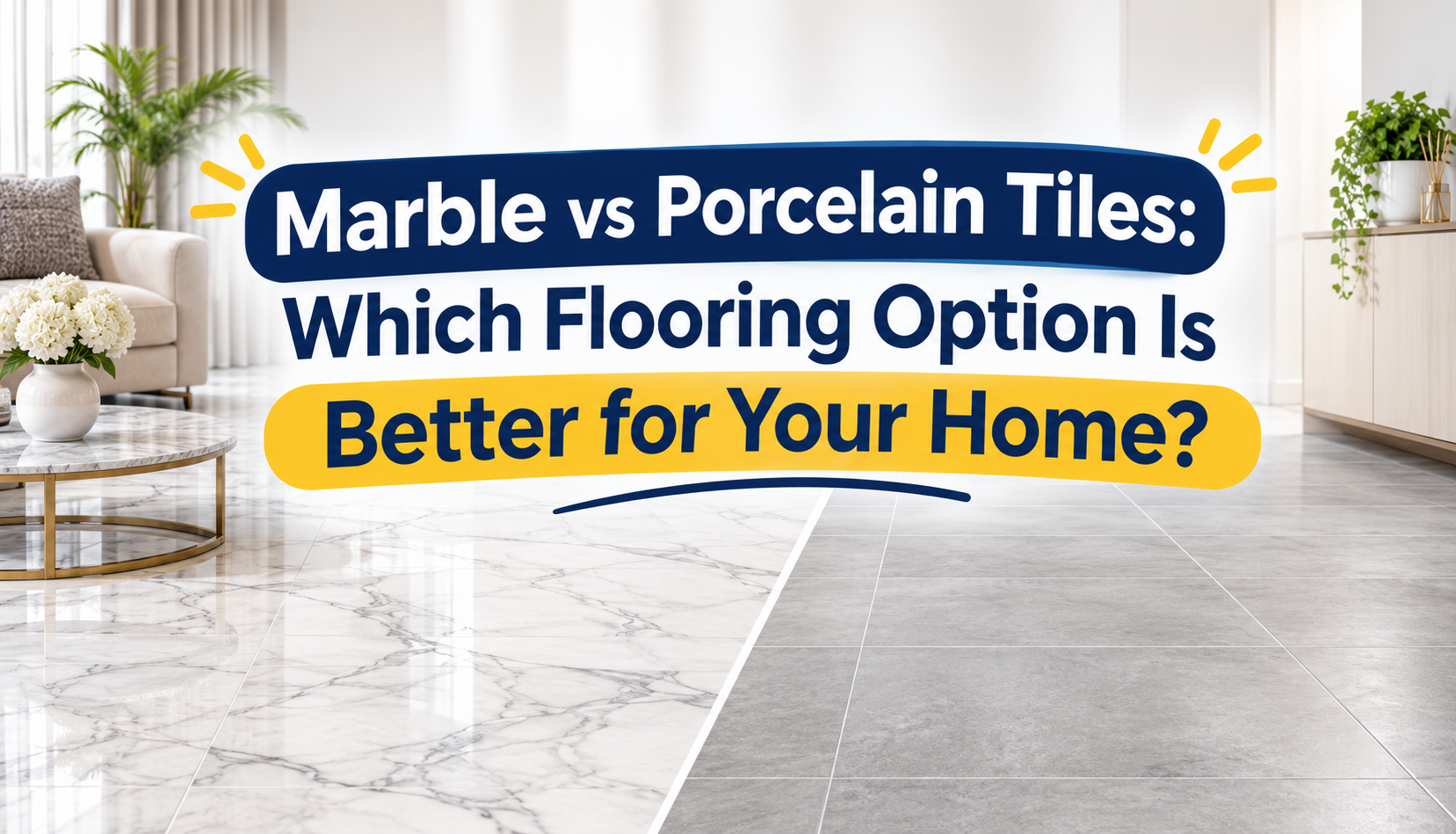
Choosing the right flooring can make a big difference to your home’s appearance, comfort and maintenance. Marble and porcelain tiles are two popular choices among Australian homeowners. Both offer attractive designs, but they have different features, costs and care requirements.
Marble is known for its natural beauty and luxurious finish, while porcelain is popular for its durability and easy maintenance.
So, which one should you choose?
Understanding marble vs porcelain flooring can help you make the right decision based on your budget, lifestyle and home design. Let’s explore their differences and find out which flooring option suits your home.
1. Understanding Marble and Porcelain Tiles
What Are Marble Tiles?
Marble is a natural stone formed over thousands of years. It features unique veins, patterns and colour variations that give every tile a distinctive appearance.
Homeowners often choose marble for living rooms, bathrooms and hallways because of its elegant finish.
However, marble is porous and can absorb moisture. It also needs regular care to prevent stains, scratches and surface damage.
What Are Porcelain Tiles?
Porcelain tiles are manufactured using refined clay and other natural materials. Manufacturers fire them at high temperatures to create a dense and durable surface.
They come in different colours, patterns and finishes. Some porcelain tiles even replicate the appearance of natural marble.
Porcelain also absorbs very little water, making it suitable for many indoor and outdoor applications.
2. Marble vs Porcelain Flooring: Key Differences
Both materials offer different benefits. Here are the main factors to consider before choosing.
Appearance and Design
Marble offers natural patterns and unique veins. Its luxurious appearance works well with both traditional and modern interiors.
Porcelain provides more design flexibility. You can find tiles that look like marble, timber, concrete and natural stone.
Which is better?
Choose marble for natural beauty and unique patterns. Choose porcelain if you prefer more design options and consistent finishes.
Durability and Strength
Marble is a strong natural stone, but it can scratch, chip or crack under heavy impact. It also needs proper care to maintain its appearance.
Porcelain tiles are dense and offer good resistance to everyday wear. They work well in busy household areas when you select the correct product.
Which is better?
Porcelain is generally more practical for busy households because it handles everyday use with less maintenance.
Water Resistance
Water resistance is important when choosing flooring for kitchens, bathrooms and laundries.
Marble can absorb moisture because of its porous structure. Sealing helps protect the surface, but it does not make marble completely waterproof.
Porcelain absorbs very little water, making it a suitable choice for moisture-prone areas.
Which is better?
Porcelain is generally the better option for bathrooms, kitchens and laundries.
Maintenance and Cleaning
Marble requires careful cleaning. You should use suitable stone cleaners and avoid acidic products such as vinegar and lemon juice. Periodic sealing may also be necessary.
Porcelain is easier to maintain. Regular sweeping and mopping with a mild cleaning solution are usually enough to remove everyday dirt.
Which is better?
Porcelain is ideal for homeowners who prefer simple cleaning routines.
Cost and Installation
Marble is generally more expensive because of its natural sourcing, processing and transportation. Its installation may also require specialist skills.
Porcelain tiles are available in different price ranges, giving homeowners more flexibility when planning a renovation.
Remember to include labour, adhesives, grout and floor preparation in your budget.
Which is better?
Porcelain is generally more budget-friendly, while marble is a premium flooring choice.
3. Advantages and Disadvantages of Marble and Porcelain Flooring
Advantages of Marble Flooring
- Natural patterns and unique appearance.
- Adds an elegant touch to interiors.
- Offers a timeless design.
- Can last for many years with proper care.
Disadvantages of Marble Flooring
- Higher purchase and installation costs.
- Requires regular maintenance.
- Can develop stains and scratches.
- Needs suitable cleaning products and sealing.
Advantages of Porcelain Flooring
- Easy to clean and maintain.
- Offers good water resistance.
- Available in many colours and designs.
- Suitable for high-traffic areas.
- Available across different budgets.
Disadvantages of Porcelain Flooring
- Can feel cold underfoot.
- Hard surface may feel less comfortable.
- Damaged tiles can be difficult to replace.
- Requires professional installation for the best results.
4. Which Flooring Is Better for Different Areas of Your Home?
The right flooring also depends on where you plan to install it.
Living Room
Marble can create a luxurious and welcoming atmosphere. Porcelain is another good option for families who want attractive flooring with less maintenance.
Kitchen
Porcelain is generally a practical choice because it offers good moisture and stain resistance. Marble can also work, but it needs extra care to prevent staining.
Bathroom
Porcelain tiles are suitable for bathrooms because they absorb very little water. Choose a slip-resistant finish for better safety in wet areas.
Bedroom
Both materials can work well in bedrooms. Marble offers a premium appearance, while porcelain provides more design choices and easier maintenance.
Outdoor Areas
Choose tiles specifically designed for outdoor use. Check their weather suitability, surface finish and slip resistance before installation.
5. Important Factors to Consider Before Choosing Your Flooring
Before deciding on marble vs porcelain flooring, consider these points:
- Lifestyle: Think about your household activities, children, pets and daily foot traffic.
- Budget: Include tile prices, installation, floor preparation and maintenance.
- Cleaning: Consider how much time you can spend looking after your floors.
- Safety: Check the slip resistance of tiles, especially for bathrooms and outdoor spaces.
- Installation: Choose experienced professionals to ensure proper surface preparation and tile installation.
6. Marble vs Porcelain Flooring: Which One Should You Choose?
There is no single winner because both materials serve different needs.
Marble is an excellent choice if you love natural patterns, elegant finishes and premium interiors. However, you should be prepared for additional maintenance and higher costs.
Porcelain is a practical option if you want durable, water-resistant and easy-to-clean flooring. It also offers plenty of design choices, including marble-inspired finishes.
For many Australian households, porcelain provides a good balance between appearance, durability and maintenance.
Ultimately, your decision about marble vs porcelain flooring should depend on your home design, lifestyle and budget.
Find the Right Flooring for Your Home
Planning to upgrade your home’s flooring? Explore different tile materials, designs and finishes before starting your renovation.
If you are considering marble flooring Sydney, compare suitable options based on their quality, appearance and maintenance requirements.
Get in touch with Glow Max Pty Ltd to discuss your flooring needs and explore suitable solutions for your home.
Final Thoughts
Marble and porcelain tiles both offer attractive flooring solutions for Australian homes. Marble brings natural beauty and elegance, while porcelain offers durability, design flexibility and easy maintenance.
Before making your choice, consider your budget, household needs and long-term maintenance expectations.
With the right material selection and professional installation, Glow Max Pty Ltd can help you create beautiful and functional spaces that suit your home.