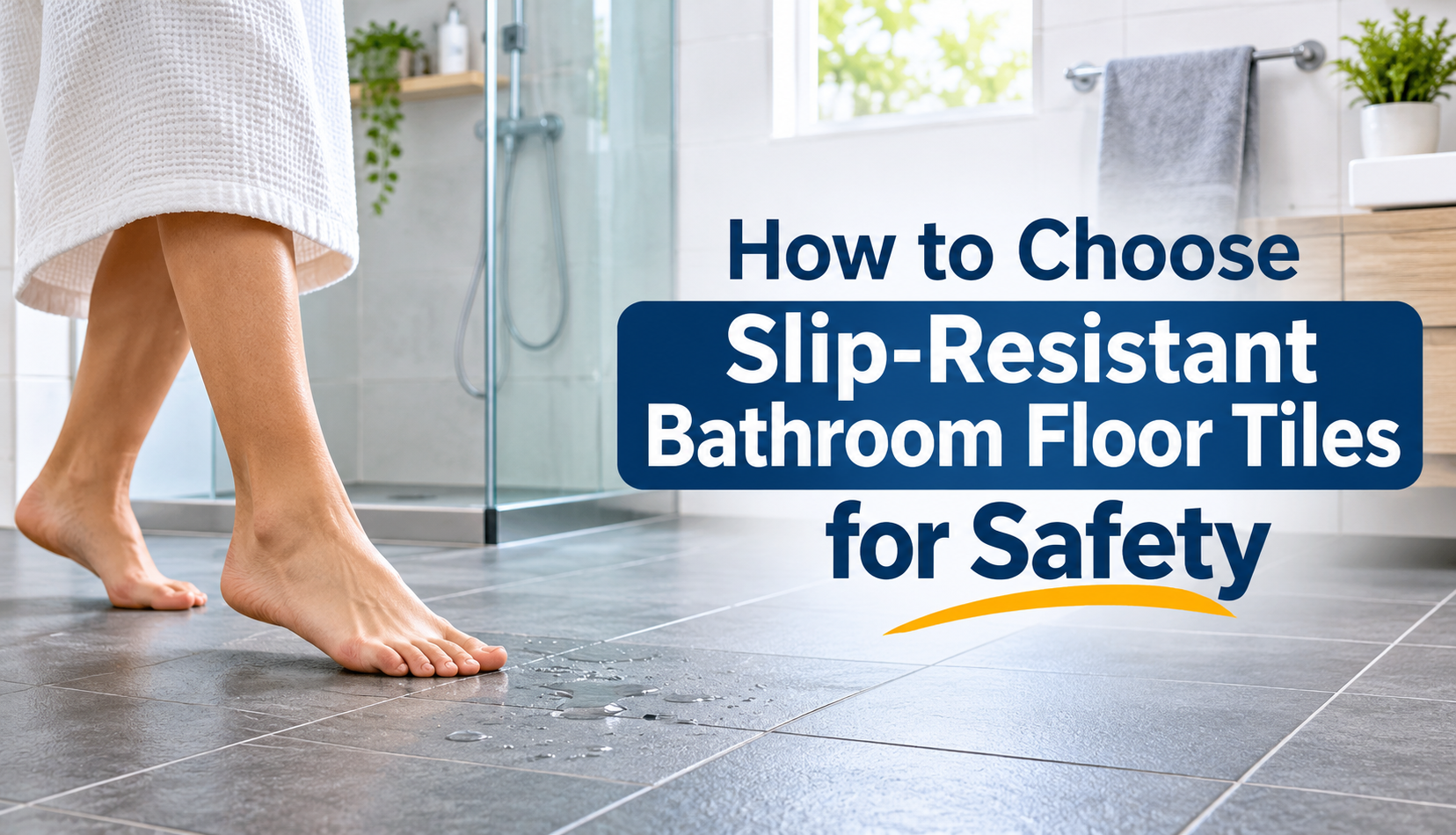
A bathroom should be comfortable, practical and safe for everyone. However, wet floors can become slippery and increase the risk of falls. This can be a concern for young children, older adults and people with mobility difficulties.
Choosing the right bathroom floor tiles can help reduce these risks. Slip-resistant tiles provide better grip underfoot while maintaining the appearance of your bathroom.
If you are planning a bathroom renovation or building a new bathroom, consider factors such as tile material, surface texture, slip-resistance rating, size and maintenance requirements.
In this guide, we will explain how to choose suitable bathroom floor tiles that balance safety, durability and style.
Why Are Slip-Resistant Bathroom Tiles Important?
Bathrooms regularly come into contact with water from showers, baths and sinks. Soap and shampoo can also make floors slippery.
Slip-resistant tiles have specially designed surfaces that provide better traction underfoot.
Here are some key benefits:
- Better grip: Helps provide better traction on wet floors.
- Improved safety: Helps reduce the risk of accidental falls.
- Everyday comfort: Makes moving around the bathroom more comfortable.
- Suitable for families: Offers a practical flooring option for different age groups.
- Long-term practicality: Combines safety with attractive bathroom designs.
Choosing the best non-slip tiles for bathroom floors can help create a safer and more comfortable space.
1. Check the Slip-Resistance Rating
Before purchasing bathroom tiles, check their slip-resistance rating. In Australia, tile slip resistance is commonly assessed under AS 4586.
Two common classifications include:
P-Rating
P-ratings come from wet pendulum testing. They range from P0 to P5, with higher ratings generally indicating better slip resistance under the test conditions.
R-Rating
R-ratings come from ramp testing and range from R9 to R13. Higher ratings indicate greater slip resistance under the relevant testing conditions.
Ask your tile supplier which rating suits your bathroom, especially if you are selecting tiles for a shower floor or another frequently wet area.
2. Choose the Right Tile Material
Different tile materials offer different benefits. Consider the following options before making your decision.
Porcelain Tiles
Porcelain tiles are durable, dense and have low water absorption. Textured and matt porcelain options are popular for bathroom flooring.
Ceramic Tiles
Ceramic tiles come in various colours, patterns and finishes. Textured varieties can provide suitable grip for bathroom floors.
Natural Stone Tiles
Slate and other natural stone tiles can give bathrooms a natural appearance. However, some stones require sealing and regular maintenance.
Mosaic Tiles
Mosaic tiles contain small individual pieces and create more grout lines. They are often used on shower floors because they can follow sloped surfaces towards the drain.
Always check the slip-resistance rating rather than relying only on the tile material.
3. Pay Attention to Surface Texture
The tile finish plays an important role in bathroom safety.
Consider these popular options:
Matt Finish
Matt tiles have a less reflective surface and can provide a practical choice for bathroom flooring. However, a matt finish does not automatically guarantee slip resistance.
Textured Finish
Textured tiles have a slightly rough or patterned surface that can improve grip. They are worth considering for shower areas and other wet spaces.
Avoid Highly Polished Tiles
Highly polished tiles often have smooth surfaces that can become slippery when wet. Consider suitable matt or textured alternatives for bathroom floors.
When selecting the best non-slip tiles for bathroom floors, check their tested performance instead of judging them by appearance alone.
4. Consider the Tile Size and Shape
Tile size can affect both bathroom design and installation.
Small tiles, such as mosaics, create more grout joints and can work well on shower floors. Their smaller size also makes it easier to follow the floor slope towards a drain.
Large-format tiles create a spacious appearance with fewer grout lines. However, installers must position them carefully to achieve proper drainage.
Keep these points in mind:
- Choose tile sizes that suit your bathroom layout.
- Consider smaller tiles for shower floors.
- Ensure the floor slopes correctly towards the drain.
- Avoid uneven tile edges that could create tripping hazards.
5. Think About Cleaning and Maintenance
Bathroom floors need regular cleaning to remain hygienic and safe. Soap, shampoo and dirt can build up over time and affect surface grip.
Follow these simple maintenance tips:
- Clean bathroom floors regularly.
- Remove soap and shampoo residue.
- Dry excess water when necessary.
- Clean grout lines to prevent mould build-up.
- Avoid wax-based cleaning products that leave slippery residues.
- Follow the manufacturer’s cleaning instructions.
If you choose natural stone tiles, check whether they require special cleaning products or periodic sealing.
The best non-slip tiles for bathroom floors should offer suitable grip while remaining easy to maintain.
6. Select Colours and Designs That Suit Your Bathroom
You do not need to compromise on appearance when choosing safer bathroom flooring. Modern tiles come in different colours, patterns and finishes.
Some popular choices include:
- Neutral colours: Grey, beige and cream create a simple, timeless look.
- Stone-look tiles: Provide a natural appearance with the practical benefits of porcelain.
- Patterned tiles: Add character and create attractive feature areas.
- Wood-look tiles: Bring warmth to contemporary bathroom interiors.
Choose colours that complement your bathroom walls, fittings and lighting. Remember that appearance alone does not determine slip resistance.
7. Consider Your Household’s Safety Needs
Every household has different bathroom requirements.
- Families with children: Choose durable tiles with suitable wet-area slip resistance.
- Older adults: Prioritise reliable grip and avoid uneven flooring.
- People with mobility difficulties: Consider accessible flooring, suitable grab rails and other safety features.
- Busy households: Select tiles that are easy to clean and maintain.
If you are renovating for someone with mobility requirements, seek professional advice about accessible bathroom design.
8. Get Professional Tile Installation
Choosing suitable tiles is only one part of creating a safe bathroom. Correct installation also matters.
Poor installation can cause uneven surfaces, drainage problems and water pooling.
A professional installer can help with:
- Preparing the floor surface.
- Applying appropriate waterproofing systems.
- Creating suitable floor gradients.
- Installing tiles evenly.
- Choosing suitable grout and adhesives.
- Following relevant Australian building requirements.
Professional installation helps improve the finish, functionality and long-term performance of your bathroom flooring.
Common Mistakes to Avoid
Avoid these common mistakes when selecting bathroom tiles:
- Choosing tiles based only on appearance.
- Ignoring slip-resistance ratings.
- Selecting highly polished tiles for wet areas.
- Overlooking proper drainage.
- Ignoring cleaning and maintenance requirements.
- Skipping professional installation.
Taking time to compare your options can help you make a better decision.
Final Thoughts
Choosing bathroom floor tiles involves more than selecting an attractive design. You should consider slip resistance, material, surface texture, tile size and maintenance requirements.
The right flooring can help make your bathroom safer, more comfortable and easier to maintain.
At Glowmax Pty Ltd, the focus is on helping homeowners create functional and well-designed spaces. Whether you are planning a complete bathroom renovation or updating your existing flooring, selecting suitable tiles and seeking professional guidance can make a lasting difference.
Planning a Bathroom Renovation in Sydney?
Ready to improve your bathroom with practical flooring and a fresh design? Choose suitable slip-resistant tiles and professional installation for a bathroom that balances comfort, style and safety.
For professional bathroom tile installation Sydney, speak with experienced professionals and give your bathroom the finish it deserves.