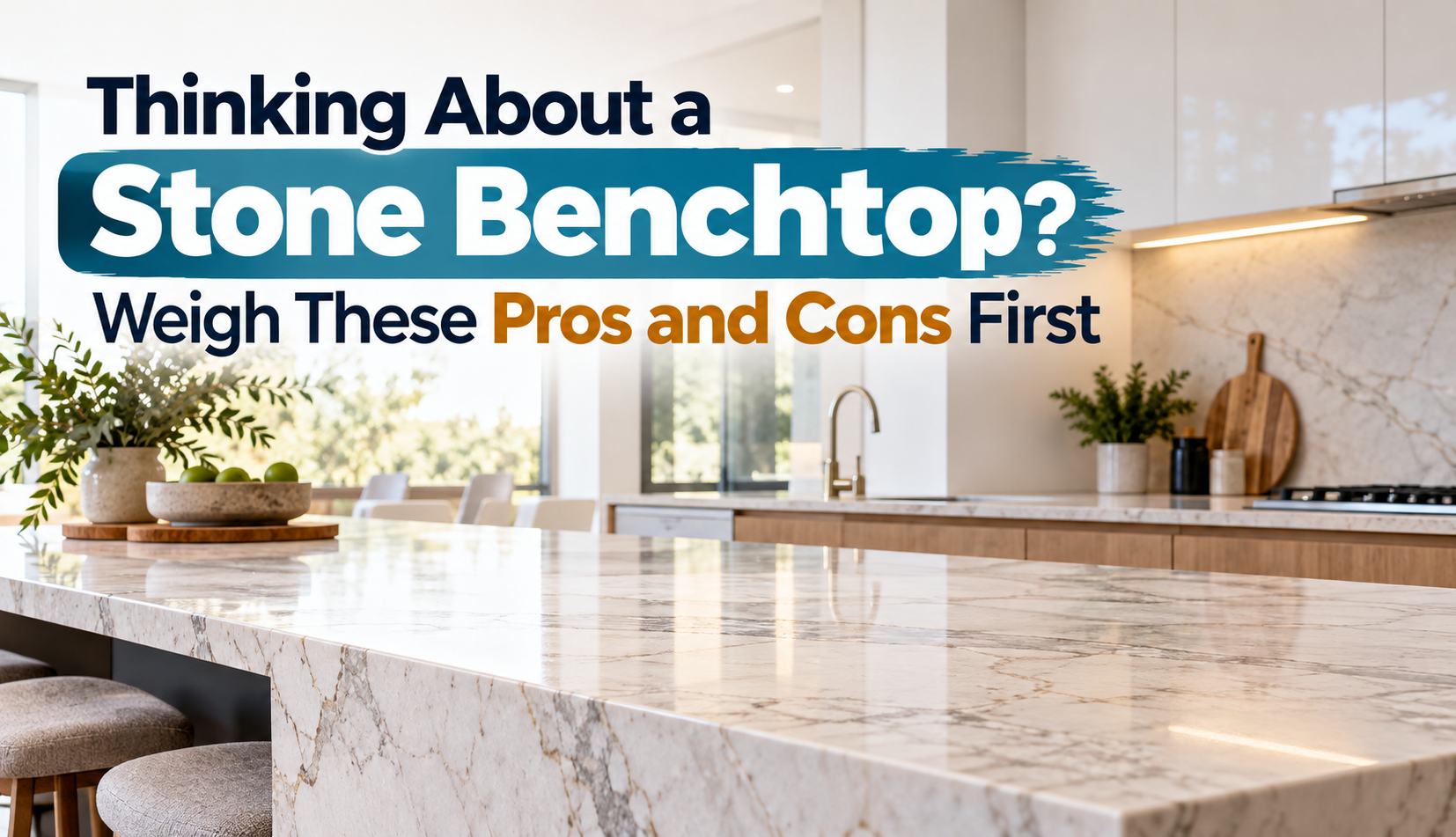
Choosing a benchtop is an important part of planning a new kitchen, bathroom or renovation. A benchtop needs to look good, handle everyday use and suit your budget. Stone is a popular choice in Australian homes because it can create a clean, modern and long-lasting finish.
However, not every stone benchtop is the same. Natural stone and manufactured stone products can have different features, care requirements and costs. Australian regulations have also changed the conversation around engineered stone, so it is important to understand exactly what product you are considering.
Before making a decision, looking at the Stone Benchtop Pros and Cons can help you choose a surface that suits your home, lifestyle and needs.
What Is a Stone Benchtop?
A stone benchtop is a hard surface used for kitchen benches, islands, bathroom vanities and other areas where you need a durable work surface.
Natural stone options can include materials such as granite and marble. Other products are manufactured using different materials and technologies.
The appearance, strength, maintenance and price can vary depending on the type of stone you choose.
That is why it is useful to compare the Stone Benchtop Pros and Cons rather than choosing a product based only on its appearance.
What Are the Main Benefits of Stone Benchtops?
Stone benchtops can offer several advantages for Australian homes. Here are some of the main benefits to consider.
1. A Stylish Appearance
One of the biggest reasons people choose stone is its appearance. Stone can give a kitchen a clean, premium and timeless look.
Natural stone often has unique patterns and colours, so each piece can have its own character. Modern stone-look surfaces can also provide a wide range of styles to suit contemporary and traditional kitchens.
You can choose a finish that works with your cabinetry, flooring, splashback and overall interior design.
2. Strong and Durable Surface
A quality stone benchtop can handle many everyday kitchen activities. It can provide a solid surface for food preparation, cooking and general household tasks.
However, durability does not mean the surface cannot be damaged. Heavy impacts, unsuitable cleaning products or incorrect installation can still cause problems.
This is an important part of understanding the Stone Benchtop Pros and Cons before purchasing.
3. Easy to Keep Clean
Stone surfaces are generally straightforward to clean when you follow the manufacturer’s care instructions.
For everyday cleaning, a soft cloth and a suitable cleaning product are often enough. You should avoid using harsh chemicals unless the manufacturer specifically recommends them.
A clean benchtop can also make the kitchen feel more organised and hygienic.
4. Many Design Options
Stone benchtops are available in different colours, patterns, textures and finishes depending on the material.
This gives homeowners plenty of flexibility when designing a kitchen. You can choose a subtle surface or select a stronger pattern that becomes a feature of the room.
5. Can Add Long-Term Appeal
A well-designed kitchen can add appeal to a home, and a quality benchtop can be an important part of that design.
A stone surface can create a finished, high-quality appearance that works well with different interior styles.
However, the value of any benchtop depends on the material, installation quality, overall kitchen design and personal preferences.
What Are the Disadvantages of Stone Benchtops?
While stone has many benefits, there are also disadvantages to consider. Understanding these before you buy can help you avoid unexpected costs or maintenance issues.
1. Stone Can Be Expensive
Stone benchtops can cost more than some other benchtop materials.
The final price can depend on the material, thickness, size, edge profile, cut-outs, installation and other requirements.
If you have a large kitchen island or several work areas, the cost can increase quickly.
It is worth getting a detailed quote before making your final decision.
2. Some Stone Needs Regular Care
Different stone products have different maintenance requirements.
Some natural stones may need sealing or additional care to help protect the surface from stains and moisture. You should always follow the care instructions provided for the specific material.
Do not assume that every stone benchtop can be maintained in exactly the same way.
3. Repairs Can Be Difficult
Stone is strong, but it is not completely damage-proof.
A strong impact can cause a chip or crack, particularly around corners, edges and cut-outs. Depending on the type and extent of damage, repairs may require a specialist.
This is another important factor when considering the Stone Benchtop Pros and Cons for your home.
4. Stone Can Be Heavy
Stone is a heavy material. Your kitchen cabinets and supporting structure need to be suitable for the selected benchtop.
Professional measurement and installation are important because the benchtop must be properly supported.
5. Some Surfaces Can Stain
Certain stone materials can be more sensitive to staining than others.
Spills from coffee, wine, oils and strongly coloured foods should be cleaned promptly. Using the correct cleaning and maintenance products can help protect the surface.
What About Engineered Stone in Australia?
Engineered stone needs special consideration if you are planning a new benchtop in Australia.
Australia introduced a national prohibition on the manufacture, supply, processing and installation of engineered stone benchtops, panels and slabs from 1 July 2024. The prohibition relates to engineered stone products containing at least 1% crystalline silica.
This means homeowners should check exactly what product a supplier is offering and whether it complies with current Australian and state or territory requirements.
There are also newer alternatives available in the market, including products designed without crystalline silica. Always ask your supplier for clear information about the material, its composition and applicable regulations.
Understanding these changes is now an essential part of the Stone Benchtop Pros and Cons when planning a renovation in Australia.
How Do You Choose the Right Stone Benchtop?
There is no single surface that suits every home. Your choice should depend on how you use your kitchen, your design preferences and your budget.
Think About Your Daily Lifestyle
Consider how often you cook and how much use your benchtop receives.
A busy family kitchen may need a different surface from a kitchen that is used occasionally.
Consider Your Maintenance Preferences
If you want a surface that requires minimal maintenance, ask your supplier about cleaning, sealing and ongoing care before purchasing.
Knowing the maintenance requirements can help you avoid surprises later.
Set a Realistic Budget
Do not look only at the price of the stone itself. Include measuring, fabrication, cut-outs, edges, installation, plumbing adjustments and other associated costs when planning your budget.
Ask About Safety and Compliance
Always ask questions about the product you are buying. Confirm what the material contains and whether it complies with current Australian requirements.
A reputable supplier should be able to explain the product clearly and provide relevant information.
Is a Stone Benchtop Right for Your Home?
The answer depends on your priorities.
If you want a strong, stylish and premium-looking surface, stone may be worth considering. However, you should also think about cost, maintenance, weight, potential damage and the specific material you are buying.
Looking at the complete Stone Benchtop Pros and Cons gives you a better understanding of what to expect before making a decision.
The best choice is not necessarily the most expensive option. It is the material that fits your lifestyle, design, budget and maintenance expectations.
Final Thoughts
A benchtop is an important investment in any kitchen or bathroom renovation. Stone can offer an attractive and durable finish, but it is important to understand both its benefits and limitations before you commit.
Take time to compare materials, ask questions about maintenance and installation, and check that the product meets current Australian requirements. A professional supplier can also help you understand which options are suitable for your project.
Glow Max Pty Ltd can help you explore suitable benchtop options and make a more informed choice based on your design and project requirements.
Looking for Engineered Stone Alternatives in Sydney?
If you are researching engineered stone Sydney options, make sure you understand the current Australian regulations and ask about the composition and compliance of any product before purchasing.
Glow Max Pty Ltd can help you explore suitable benchtop materials and understand the available options for your kitchen or renovation project. Contact the team to discuss your requirements and find a surface that suits your home.